
No KYC Casinos: The House Edge Behind the Promise
 Available in US
No KYC casinos promise a shorter route from registration to play: less paperwork, often a crypto deposit, perhaps a brisk withdrawal. The catch is that “no checks” is not a protection or a licence category. In Great Britain, commercial gambling offered without a Gambling Commission licence is illegal for the operator; offshore sites are not licensed here, and UK protections do not apply to them.

The house edge is the quiet arithmetic beneath the headline. A fast-looking cashier cannot improve a game’s expected return, and a thin identity process can leave a player with fewer practical ways to challenge a frozen balance. I have spent years watching gambling businesses dress friction up as convenience. Sometimes it is convenience. Sometimes the friction has merely been moved to the moment money is due back.
As of November 20, 2026, the useful comparison is not “documents or no documents”, but the rules, safeguards and recourse that sit behind each model. GamStop is often typed “gamestop”; the correct name is GamStop. Its online exclusion covers participating operators licensed in Great Britain, not offshore services. Self-exclusion lasts for its full chosen term and remains in place afterwards until the person contacts GamStop to remove it; an offshore site is not a way round it. For support, GamCare’s National Gambling Helpline is free on 0808 8020 133, around the clock. This page is about the market and its claims, not a list of places to play.
What A No KYC Casino Actually Means
A no KYC casino is a marketing description, not a regulated class of casino. KYC means “know your customer”: identity information and checks used to establish who holds an account, alongside age checks and, where required, anti-money-laundering enquiries. In practice, a site using the phrase may ask for little at registration, then request documents at a withdrawal, after a deposit threshold, or when activity triggers its own risk controls. “No KYC” can mean “not yet”.

That distinction matters particularly for a no KYC casino UK search. Under section 33 of the Gambling Act 2005, providing commercial gambling to consumers in Great Britain requires the relevant Gambling Commission licence; an overseas licence does not substitute for it. The Commission’s public register is the sensible baseline: check that the legal operator and the domains match, rather than taking a badge or a footer claim on trust. Offshore sites are not licensed in Great Britain. UK protections—including the Commission’s licensing standards and its approved complaint route—do not apply.
The phrase “no KYC online casino” also hides a basic conflict. A legitimate operator has reasons to identify customers: age, fraud and money-laundering controls are not decorative paperwork. On the other hand, document requests arriving only after a customer asks to withdraw deserve scrutiny. UK rules require licensed operators to verify identity before gambling, and say they must not make withdrawal conditional on information they could reasonably have requested earlier, while preserving checks legally required at that moment. Offshore terms may offer no comparable standard or effective route to enforce it.
What The Numbers Say About Convenience
There is a useful domestic benchmark. Gambling Commission data for June to September 2024 recorded 44.2 million withdrawals by customers of large online operators. Of those, 96.3% cleared automatically, 3.5% within 24 hours and 0.1% took up to 48 hours. That is a measure of withdrawals, not a promise that every account will be paid instantly; identity or anti-money-laundering concerns can still require attention. But it punctures the idea that regulated means inherently slow.
The Commission says there is no valid reason to delay a payout where there are no regulatory concerns. It has also said that introducing friction at withdrawal rather than deposit is unacceptable. The rules set no fixed maximum number of days for every withdrawal, but fair terms, identity-verification duties and the prohibition on reverse withdrawals do real work. Since 31 October 2021, licensed remote operators cannot offer the customer the option to cancel a withdrawal request. Money should not be lured back onto the table while the cashier waits.
Crypto changes settlement mechanics, not the operator’s obligations or solvency. Bitcoin targets an average block every 10 minutes, but an average is not a stopwatch: a transaction commonly needs confirmations, and six blocks can take much longer than an hour. Ethereum charges gas, and the fee applies even if a transaction fails. A displayed “instant withdrawal” may describe the site’s approval, not the time a network or wallet takes to settle. A crypto casino no KYC claim confuses three separate clocks: review, processing and confirmation.
| Method or stage | Concrete timing or rule | What it does not prove |
|---|---|---|
| UK-licensed online withdrawals | 96.3% cleared automatically, June–September 2024 | Every request will be instant |
| Bitcoin block target | Average 10 minutes per block | A block is guaranteed within 10 minutes |
| Bitcoin merchant confirmation | Six confirmations are commonly required | Six confirmations take exactly 60 minutes |
| Ethereum standard ETH transfer | 21,000 units of gas | The fee is fixed; gas price varies |
| UK remote operator withdrawal | No fixed maximum completion period in the LCCP | An operator may delay without explanation |
The figures in the first row are the Commission’s; the chain figures describe networks, not casino performance. Treat “instant withdrawal no KYC casino” as a claim needing definition: instant from which event, in which currency, with what review, fees and network conditions? The answer is often in small print, where speed meets a queue.
No KYC Crypto Casino The Checks Behind The Claim
A no KYC crypto casino often starts with a wallet address rather than a bank card. The deposit may arrive on-chain, and a site may allow play before asking for conventional identity documents. That is not proof that it will never ask. Operators can use transaction monitoring, account behaviour and withdrawal size to decide that more information is needed; applicable laws may require checks. Offshore operators are not bound by the UK’s precise licensing framework, which makes the written terms and the operator’s actual recourse especially important.
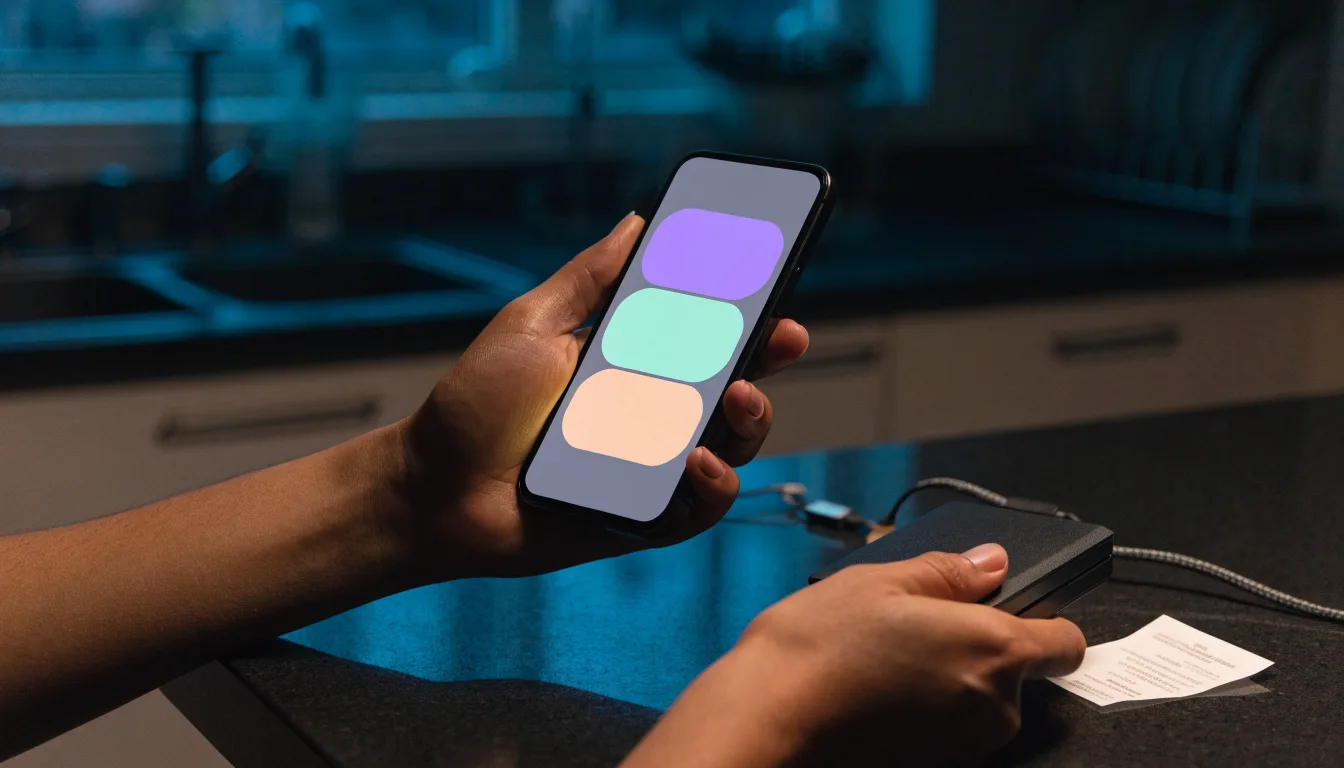
At a UK-licensed remote casino, identity information—including name, address and date of birth—must be obtained and verified before the customer is permitted to gamble. The operator should explain before a deposit what evidence might be needed, when and in what form. UK money-laundering rules also set a €2,000 threshold for remote-casino deposits or withdrawals connected with gambling, whether a single transaction or linked transactions, but that threshold does not cancel the earlier licence duty to verify identity before play. The Commission calls one approach “hybrid”: age and identity are established at registration, with fuller verification later where lawful. No one should read the €2,000 figure as a safe harbour from checks.
The warning sign is not a request for documents itself. It is a site promising no checks, taking deposits readily, then relying on vague discretion or a shifting document list when a withdrawal is requested. The Commission reports that over a quarter of complaints reaching its Contact Centre concern identity verification, including cases where documents are requested only at withdrawal. In its licensed market, rules constrain that behaviour. Offshore, the player may be left with a dispute process named in the terms but little leverage to make it work.
Crypto Casino No KYC The Licence Is The Real Divide
Crypto casino no KYC advertising often presents a distant regulator as if it were a British substitute. It is not. Curaçao’s LOK reform took effect on 24 December 2024, replacing the former master-licence and sub-licence arrangement with direct licensing by the Curaçao Gaming Authority. Legacy orange sub-licence certificates ended on 15 October 2025; an old /JAZ number or seal is not independent proof of a current licence. Even a valid foreign licence does not authorise an operator to offer commercial gambling to consumers in Great Britain without a Commission licence.
Other offshore claims vary. Malta’s Gaming Authority has a licensing system and publishes unauthorised URLs; Kahnawà:ke and Anjouan describe their own permits and complaint arrangements. These details can help establish what an operator claims to be subject to, but they do not import British consumer protection. Anjouan’s own licence language says holders must comply with the laws where they operate. That is a useful qualification, not a loophole.
The Gambling Commission’s warning is not theoretical. Its Illegal Markets team reported 3,140 cease-and-desist and disruption notices since April 2024, and 287,961 URL removals. It found an average 32% fall in engagement across 160 illegal gambling sites after disruption activity. These are enforcement measures, not a count of sites made safe or permanently inaccessible. The market reappears under another domain; paperwork remains less nimble.
Five Signs An Operator Deserves Scrutiny
A Licence That Matches The Domain
Check the Gambling Commission register for a British licence and confirm the operator and the exact website domain. A foreign seal, a logo image or an old Curaçao certificate does not amount to UK authorisation. If a CGA Certificate of Operation seal is claimed, it should resolve to the CGA verification service and show the same domain; a mismatched domain is a serious warning.
Identity Rules Stated Before Money Moves
Read the terms for what identity documents may be requested, what triggers a review and how long a review can take. A site that advertises no verification but reserves an unlimited right to demand anything later has not removed friction; it has hidden the terms of it. UK operators should explain likely evidence requirements before deposit.
Withdrawal Terms Without A Trapdoor
Look for processing stages, fees, currency conversion, limits and reasons a payment can be held. Watch for one-withdrawal-at-a-time clauses, vague “security review” extensions or a right to cancel and reverse a payout. UK-licensed operators cannot offer reverse withdrawals, and unfair terms cannot simply be made fair by being printed in small type.
A Real Complaint Route
A British-licensed operator must provide access to an approved ADR entity if its complaints process has not resolved the dispute within eight weeks. Check the terms for the named provider and the complaint steps. Offshore sites may name an ADR service too; confirm that the body exists, covers that operator and explains how its decision can be enforced. A contact form alone is not independent redress.
Funds And Game Returns Explained
Separate account balance from bonus balance, check whether customer funds are protected if the operator becomes insolvent, and look for game RTP information from a credible source. RTP is a long-run theoretical return, not a guarantee for an individual session, and it does not tell whether the cashier will pay. A glossy RTP figure cannot compensate for weak custody or a missing regulator.
A Practical Way To Assess The Claims
- Establish the legal position. Search the Gambling Commission’s public register for the operator and domain. If there is no British licence, treat the site as offshore and outside UK protections; a foreign licence does not cure that point.
- Read the withdrawal terms before considering a deposit. Identify verification triggers, review periods, fees, minimums, maximums and the payment route. This is where “instant” tends to acquire adjectives.
- Separate site processing from payment settlement. Ask whether a claim refers to approval, sending funds, bank availability or blockchain confirmation. Network averages are not guarantees, and crypto transfers can be irreversible.
- Check the bonus arithmetic. Under UK rules in force from 19 January 2026, wagering requirements on bonus funds are capped at 10 times for licensed operators. Offshore offers are not bound by that cap; calculate the required play and check game contributions and cash-out limits.
- Confirm complaint and fund safeguards. For a British licence, identify the operator’s complaints procedure and approved ADR route, and read its customer-funds protection rating. Offshore terms may describe a foreign regulator or ADR provider, but that is not UK recourse.
- Judge the “no KYC” promise against the rules. A site may delay checks or avoid conventional documents at first, but “never verified” is not a sensible assumption. If a process asks for information at withdrawal, retain the terms and communications; do not send sensitive documents through an unverified channel.
Questions About No KYC Casinos
What Are No KYC Casinos?
They are gambling sites marketed as requiring little or no identity verification, often at registration and sometimes alongside cryptocurrency payments. The label is not a licence or a promise that checks will never happen: a site may ask later, particularly at withdrawal. In Great Britain, a foreign operator still needs a Gambling Commission licence to offer commercial gambling to consumers here.
Is A No KYC Casino Legal In The UK?
The Gambling Commission says it is illegal for an operator to offer commercial gambling to consumers in Great Britain without its licence, even if the operator holds a licence elsewhere. The offence under section 33 of the Gambling Act 2005 attaches to providing facilities, not ordinarily to an adult consumer using a site. Offshore sites do not give British licensing protections or the UK complaint route.
Can A No KYC Casino Refuse A Withdrawal Until Documents Arrive?
A site may request verification where law or its terms require it, but “no KYC” does not guarantee a withdrawal without checks. For a British-licensed operator, a withdrawal cannot trigger a request for information it could reasonably have requested earlier, though legal obligations such as anti-money-laundering checks may require information at that point. Offshore operators are not subject to the same UK licence conditions.
Is A Crypto Withdrawal Really Instant?
Not necessarily. A casino may approve or broadcast a transaction quickly, while the blockchain, receiving wallet or exchange still waits for confirmations. Bitcoin targets an average block interval of 10 minutes, but that is not a guaranteed arrival time; Ethereum fees also vary with network conditions. Check whether “instant” means approval, dispatch or usable funds, and include conversion and withdrawal charges.
Are No KYC Crypto Casinos Safer Because They Use A Blockchain?
No. A blockchain can make transactions visible and hard to reverse, but it does not verify that a casino is licensed, solvent or fair, nor does it provide a British dispute process. A valid foreign licence may offer some oversight in its own jurisdiction; it does not replace a UK Gambling Commission licence for offering gambling in Great Britain.
What Help Is Available If Gambling Is Causing Harm?
GamCare operates the free National Gambling Helpline on 0808 8020 133, 24 hours a day, every day; it is also available through live chat and WhatsApp. In Wales, 0808 2819 265 is also listed. GamStop self-exclusion covers participating British-licensed online operators for its full term and remains until the person contacts GamStop to remove it. An offshore casino is not a workaround.
The House Edge Does Not Stop At The Game
The fair comparison is not paperwork against freedom, but a verified British licence and enforceable standards against an offshore promise whose checks, payout terms and remedies may be harder to test. The Commission’s benchmark was 44.2 million withdrawals in June to September 2024, with 96.3% clearing automatically; the word “instant” still has to earn its keep. For confidential support, GamCare’s National Gambling Helpline is 0808 8020 133, free and open 24 hours a day.
Safety and Verification
Content created by the «Ukplaychron.com» team